
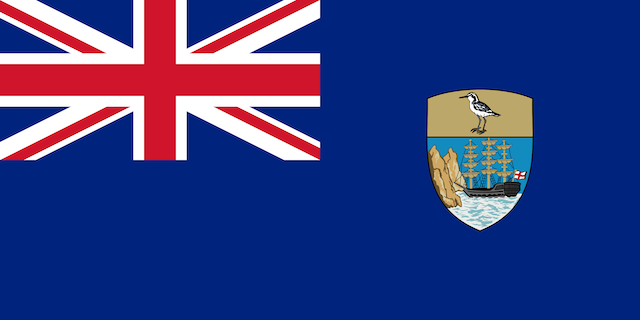
YachtFlags.com provides high quality courtesy flags that are manufactured in durable Knitted Polyester fabric. Knitted so that the fabric itself does not deteriorate in the constant movement that marine flags are usually exposed to, and polyester so that the flag does not weaken in the strong UV-light usually found in the main sailing areas of the world.
YachtFlags.com offers a discount to Noonsite members.
Use the coupon code NOONSITE-5A2B when checking out to get 10% off today.
YachtFlags.com provides high quality courtesy flags that are manufactured in durable Knitted Polyester fabric. Knitted so that the fabric itself does not deteriorate in the constant movement that marine flags are usually exposed to, and polyester so that the flag does not weaken in the strong UV-light usually found in the main sailing areas of the world.
YachtFlags.com offers a discount to Noonsite members.
Use the coupon code NOONSITE-5A2B when checking out to get 10% off today.
YachtFlags.com provides high quality courtesy flags that are manufactured in durable Knitted Polyester fabric. Knitted so that the fabric itself does not deteriorate in the constant movement that marine flags are usually exposed to, and polyester so that the flag does not weaken in the strong UV-light usually found in the main sailing areas of the world.
YachtFlags.com offers a discount to Noonsite members.
Use the coupon code NOONSITE-5A2B when checking out to get 10% off today.
Pre-Arrival Boat: St. Helena Harbor Master requests an Advance Notice of Arrival. Ensure you have official departure clearance from your previous port (exit zarpe) as Customs will want to see this on arrival. See Clearance for more details.
Notice: St. Helena government have closed the Jamestown mooring field since January 2024 until further notice, due to ongoing maintenance and health and safety issues. Anchoring is now the only option. See this news item for details.
Pre-Arrival Crew: Yacht crew require medical/health insurance cover in order to land on St. Helena (this can be purchased locally). A stay of up to 183 days is permitted for all nationalities. See Immigration for details.
Where can I enter? Jamestown on the NW coast, is the only port of entry and port of refuge for yachts on St. Helena.
Are fees high to enter by yacht? If staying less than 72 hours only light fees are charged. If staying longer there is a £35 harbour fee and £20 landing fee per person. See Fees for more details.
What security concerns should I know about? St. Helena is a safe and very welcoming island - serious crime is a rarity.
If you have information for this section, or feedback on businesses used, please let us know at editor@noonsite.com. We also welcome new information about businesses you have used (see Related Businesses).
As a free user of Noonsite you are restricted to viewing 3 country formalities per month. You have viewed 0 formalities this month – but can view the countries you have accessed to date as many times as you want.
Become a Noonsite Member and you can view unlimited formalities each month and enjoy additional member benefits. Membership fees help our team keep country formalities information up-to-date in support of cruisers worldwide.
Find out more about membership levels and Become a Noonsite Member.
Leave a comment
You must Login or Register to submit comments.
Notice: St Helena government have closed the Jamestown mooring field since January 2024 until further notice, due to ongoing maintenance and health and safety issues. Anchoring is now the only option. See this news item for details – https://www.noonsite.com/news/st-helena-closure-of-moorings/
Stop over between Cape Town South Africa to Salvador Brazil. Not a cheap stopover at all, rather the opposite. Country currency is British Pounds.
Formalities example landing fees, mooring fees, customs ect etc was way over 200£. Then you have to use the local ferry from your boat to shore at 2£ per person return trip. Operates from 8am to 6pm daily. They are supposed to work until 8pm but say NO, when you ask. So no late returns to boat.
Food supplies- don’t count on it. Make sure you have provisioned enough to complete your crossing. Don’t even count on fresh bread, fruit & veg. If you find it’s an added bonus and you extremely lucky.
Alcohol – most alcohol comes in from South Africa, but at triple the price. Stock your boat to the brim for the entire crossing .
Banking – no atm. You draw money from a bank teller with between 15 to 20£ handling fee on each transaction. No shop on the island accepts cards of any sort.
Community – wow what a beautiful friendly community. They go out of their way to great. Your go to place on the island is Ann’s place. You need assistance with anything you ask for help at Ann’s place. Sadly we only learnt that the day before we were leaving.
Car rental on the island is cheap. We used Brendan, he went the extra mile for us. We were charged 15£ a day no hidden costs. He delivered and collected the car with no extra charge. Please support him.
Jacob’s ladder, is a must do. 699 steps, you can do it you just need to find a rhythm. At the top about 300 meters down that road you will find Rosies restaurant, its another must visit. Once you filled up with food and beer, walking down the 699 steps comes naturally.I did it in 5 min down. I met a gent in his late 60’s heading up. His time is 13min up.
The island is rich in history and a really must see so rent a car and get out into the island.
Oops almost forgot – washing. Yes it can be done but at a price. Saying that it was worth every £. We did the wash and fold option. The clothing came back looking like it was ironed. It’s a serious up hill walk to the company again arrange with Ann’s place for collection /delivery.
Yacht Club – I would prefer not to comment and sound negative. Sad as so much can and should be done to make visiting yachts feel more welcome.
Great write up Sam. Slow down so we can catch up.
A welcome stop for those on transatlantic passages, St Helena is a beautiful and curious island. Moorings are well maintained and while the anchorage can roll a little at times, it was really pleasant and able to swim off the back of the boat in clear water to view local marine life. We met a very large and friendly manta ray and had fish around the boat most times.
The dingy dock is across the local anchorage and best to use ferry service in and out. Our tender miraculously disappeared one night from the dock, but locals will insist there is no theft on St Helena – even after this was the third incident in recent months. The ferry service is not cheap at 2 GBP and runs hourly till 6pm. This is rather unfortunate as you cannot get back from town after dinner. The ferryman can get rather irate if people are not on schedule or request a pickup outside of the hourly schedule so best to plan around that.
Check in is fairly straightforward, but does require a trip across town as immigration is now housed at the new police station. The small town is really quaint and people are friendly and helpful. Fuel is easily arranged via the Solomans company and water is available at the main dock. No stores accept credit cards and best to use GPB. WiFi must be the most expensive in the world and is charged by the minute at 13 GBP. It’s slow and cell [mobile] phone connection around the island is intermittent and poor – no reception at the cruiser’s anchorage. Fresh vegetables and eggs are rare to come by, and typically come to town once a week on Thursdays – grab what you can when you can. Most spares and parts are all flown in from South Africa or the UK. Flights from South Africa arrived once a week.
Logistics aside, St Helena was surprisingly beautiful and a trip into the island’s interior is a must. It has verdant hills, green pastures, lush rainforest and arid, rock-strewn hills all in one. Diving is great and Craig at Into the Blue is patient and professional. Hazel and Peter at the consulate hotel provide a warm welcome for cruisers. While there is a yacht services company, the majority of our interactions were confusing and unpleasant resulting in pretentious lectures by the owner and recounts of his recent circumnavigation. We were not exactly sure what was being offered other than recounts of their voyage and best to clarify exactly what services are provided and the associated costs before making any assumptions and avoid unpleasantries. They did however assist in catching our catamaran after the Mantus mooring carabiner failed and she drifted. We spent 3 weeks in St Helena while waiting for a new wind transducer and really enjoyed our time there, but 1 week would have been more than sufficient for us.
Visited there in June 2017 – Harbour dues 35GPB, mooring ball 2GBP per day, Ferry service 2GBP return trip payable at the end of your stay and Immigration was 17GBP per person. Fuel is delivered to the boats at 1,27GBP per litre. We stayed a month, hired a car and really enjoyed the hospitality of everyone especially Hazel, the owner of the Consulate Hotel.
According to Webb Chiles’ journal of March 7th 2017:
“I like St. Helena very much. It is remote, quaint, and unchanged ashore from when I was here in 1988. An airport has been built at a cost of more than three hundred million dollars and was supposed to open last year, but almost unbelievably they built it in the wrong place, on the edge of the cliffs on the windward side of the island where turbulence from the trade winds meeting those cliffs makes landings and takeoffs unacceptably dangerous. How such a mistake could be made by presumably professionals boggles the mind. In any event, when any of the 4,000 residents of St. Helena see an unfamiliar face they still know you’ve sailed there on your own and are charmingly friendly.”
Doesn’t look as if the airport situation will be solved any time soon.
Rather than changing currency in St Helena, bring British pounds which are accepted and are way easier to convert to another currency after you have departed.
Everything is pretty such cash. Not able to use credit cards or debit.
Update notes for St. Helena.
Immigration is a flat fee of 17GBP for up to 183 days.
If the ferry service is used after hours there is an additional fee of 10GBP payable.
If you want to see some of the island there is a lovely lady called Val Joshua tel: 22235 who loves walking and is glad to take people for serious walks. She is a mine of information. She does not charge and she may not be available. She doesn’t like to take more than 4 people.